Careem Care: support tooling for 3,200+ agents
Improving the customer-support systems for 3,200+ agents across a vehicle-for-hire operation in 100+ cities and 15 countries.
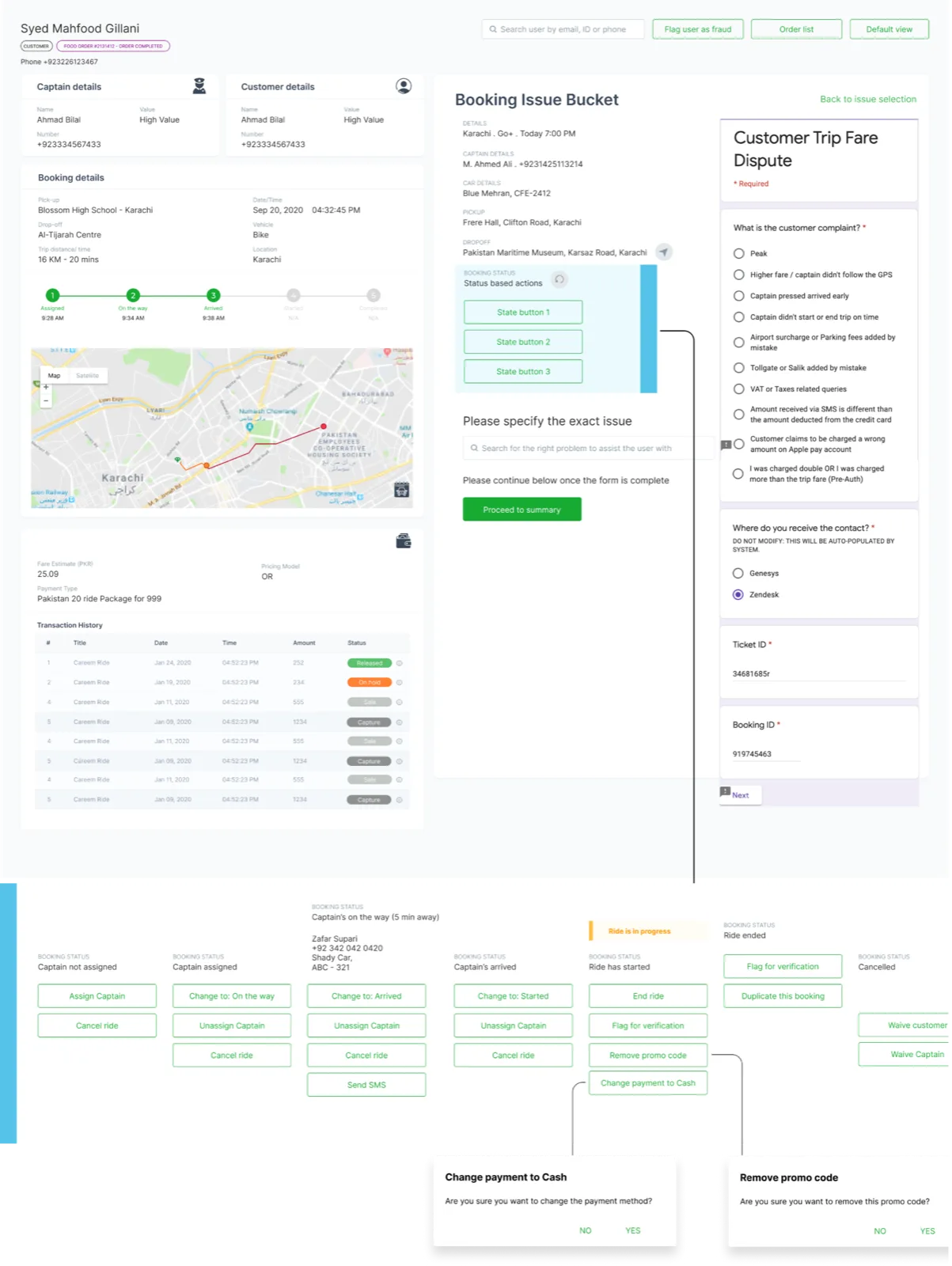
What those numbers mean Careem support agents were jumping between separate tools to answer one ticket. I replaced them with a single console. Each ticket now takes 76 seconds less to handle, across 3,200 agents in 15 countries. That time adds up to roughly an hour saved per agent per day.
Summary
As a product designer at Careem, a major vehicle-for-hire company with operations in over 100 cities across 15 countries, my job was to improve the experience of the customer support agents. I worked closely with the product team to set up experience metrics that measure usability and learnability over time, and I ran research to find knowledge gaps and opportunities.
The main problem was a slow agent workflow. Agents had to use many systems built for other people. To fix it, we ran the user-centered PACT design process: research, agent interviews, and system mapping. I built a prototype of a unified system to improve the agent experience, and we used data visualization and sentiment analysis to measure the impact of the changes.
About Careem
Careem is a vehicle-for-hire company and a subsidiary of Uber. It is based in Dubai, with operations running in over 100 cities, covering 15 countries including the Middle East, Africa, and South Asia. The company was valued at over US$2 billion in 2018 and sold to Uber for $3.1 billion in 2020.
My role
- Helped the product team set up experience metrics to continuously measure the change in usability and learnability of the system.
- Conducted research to identify knowledge gaps and opportunities.
- Worked closely with developers and engineers to improve an existing solution.
- Prototyped and presented a unified version of the system to aim for in future.
- Configured Tableau and RStudio for data visualisation and sentiment analysis of gathered data.
Metrics I tracked
- Experience: System Usability Scale (SUS), time on task, abandonment rate, missing dispositions, first contentful paint.
- Efficiency: page load time, average handling time (AHT).
- Marketing: customer satisfaction score (CSAT), net-promoter score (NPS).
High-level goals
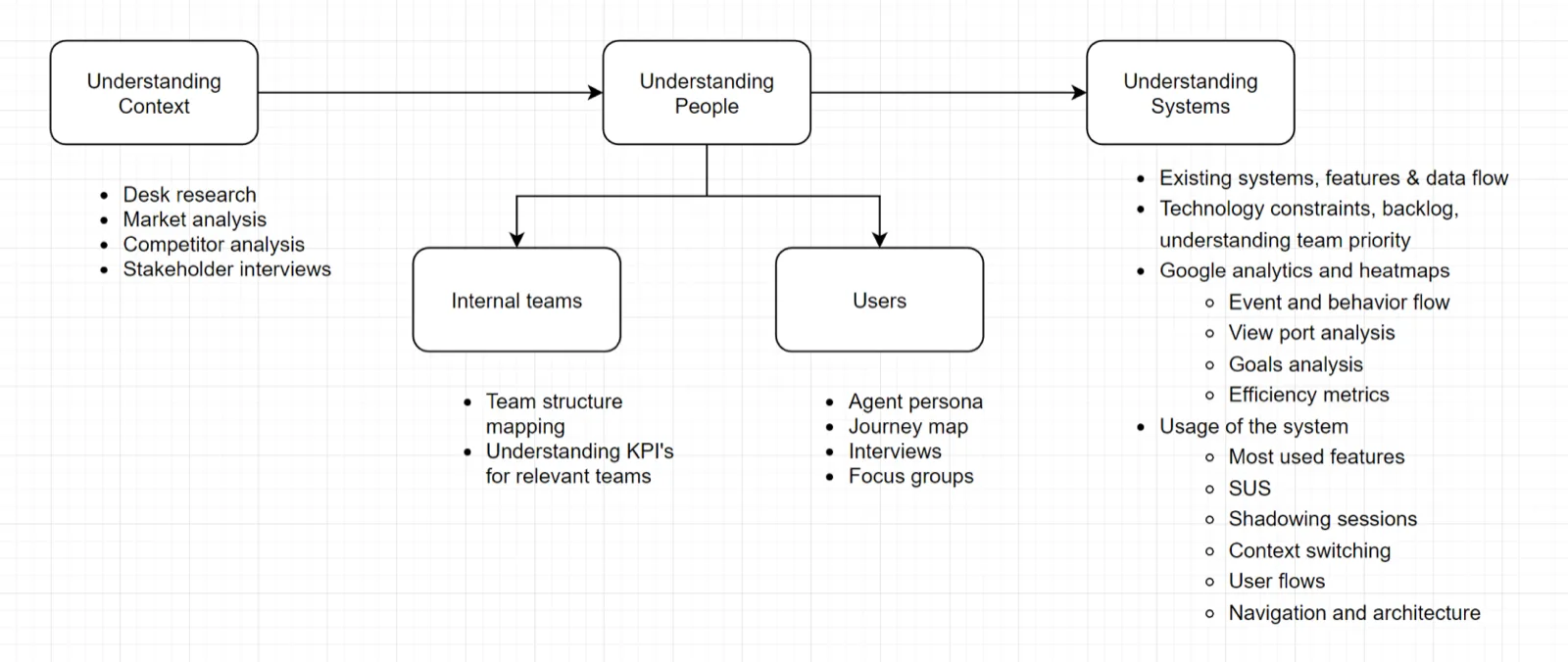
- Understand the context, people and systems.
- Research existing agent experience and suggest improvements.
- Set up success metrics for gauging agent experience.
- Improve design consistency.
- Reduce time to solve contacts.
Challenges
- Agents access multiple systems which were initially created for other actors.
- Limited UX operations and feedback-gathering methods.
- Workflow automation was the top priority while improving the existing system.
- No process was in place to reduce accumulated design debt.
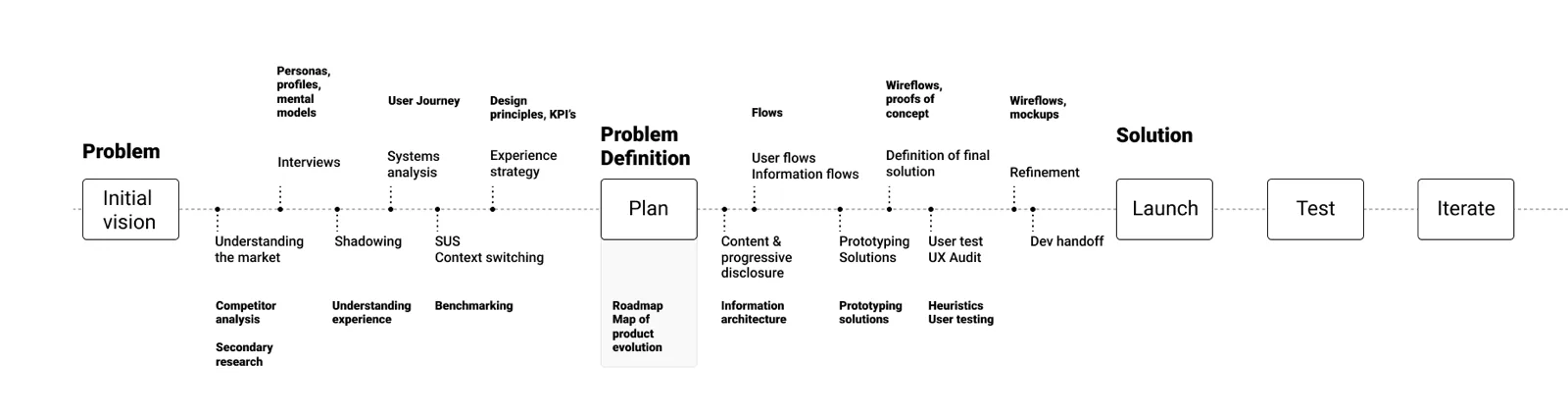
A user-centered process: PACT
Understanding
Research highlights surfaced three core problems: information and features were scattered (a disjointed, inefficient support process led to longer resolution times); missing dispositions impacted AHT (limited capability to close contacts due to missing issue buckets); and a heavy reliance on the knowledge base (rapid policy changes meant agents spent a lot of time relearning procedures).
Interface design and information architecture
Research found that clear, intuitive interface design and good information architecture decide whether the disposition management system works. Redundant steps across issue buckets caused confusion and slowed agents down. Navigation problems, slow load times, and wrong disposition categorization all held back the support process.
Understanding teams, journeys and systems
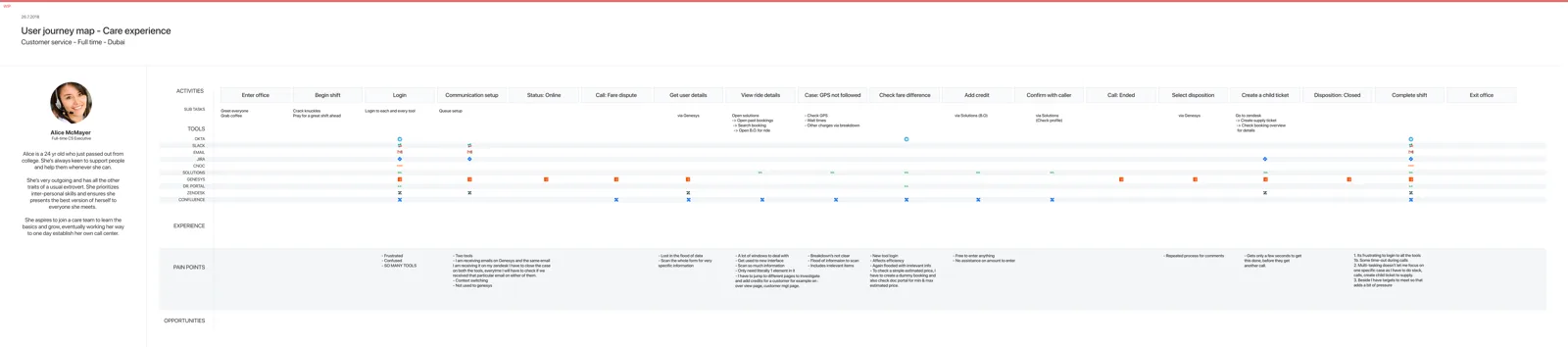
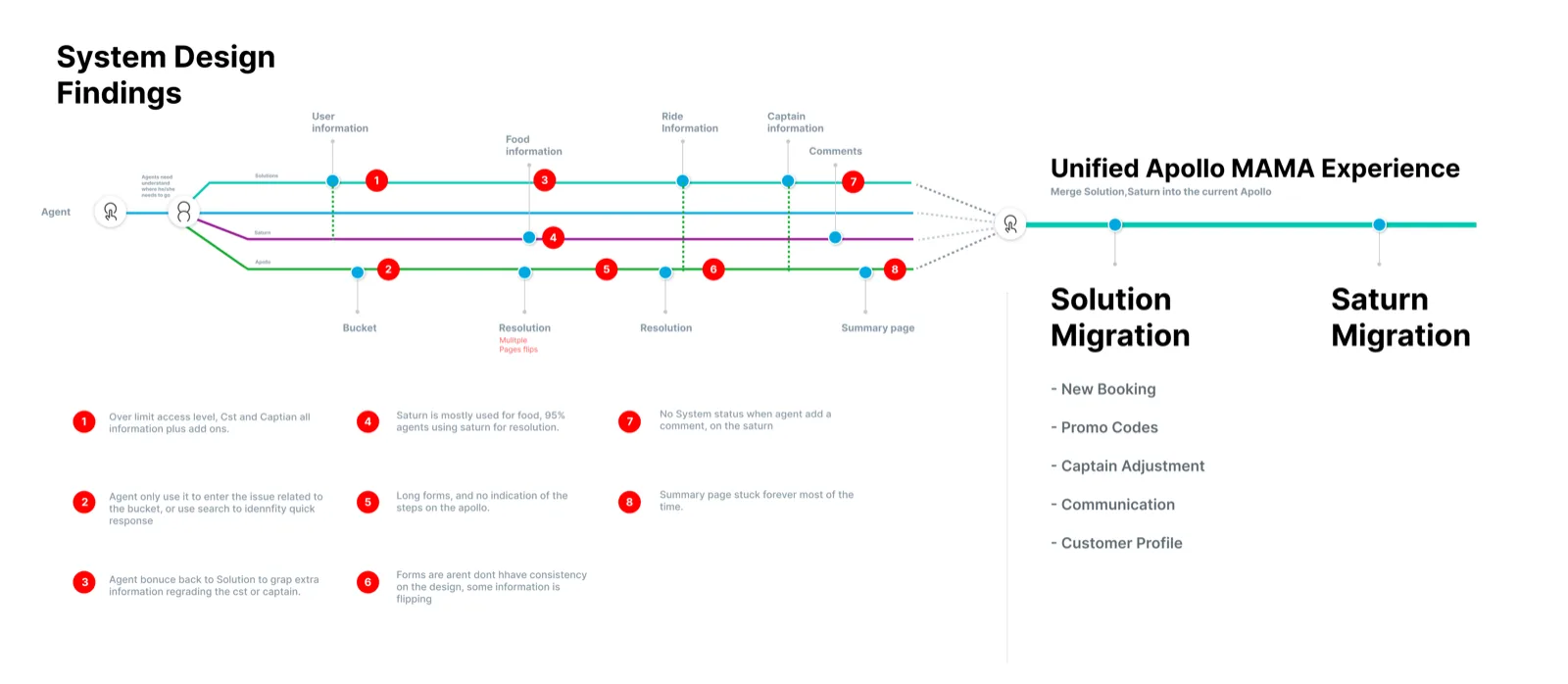
I mapped team structure to see the flow of information and responsibilities, and mapped agent journeys to show which systems they touch to resolve an issue. Agents switch between many internal and third-party applications. From a systems view, the key systems were booking management, supply management, customer management, and payment management.
Research
Interviews and shadowing
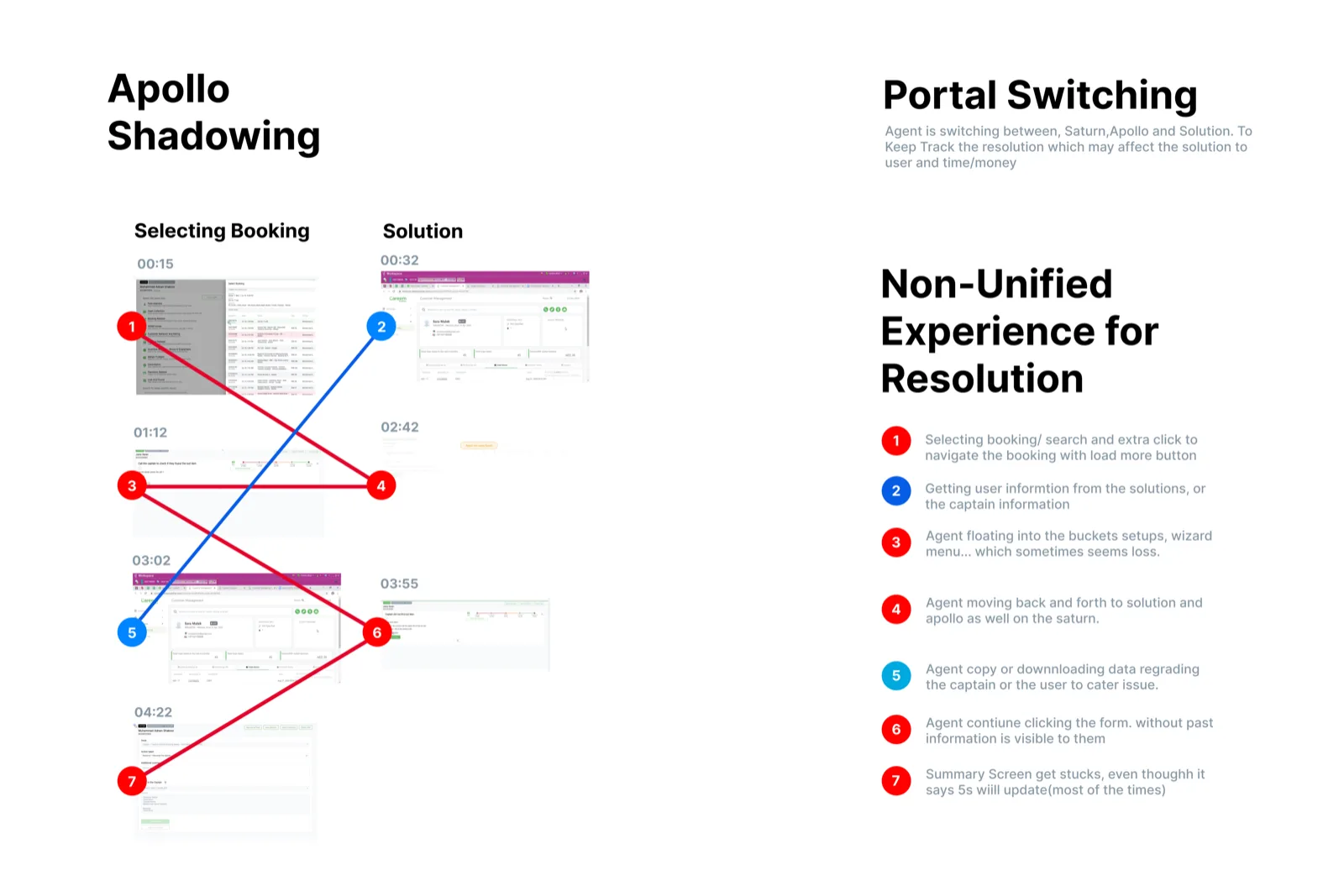
I ran structured and unstructured interviews across generic, personal, role, goal, and challenge themes. I also watched agents work in their natural environment through shadowing sessions, without interfering, so I wouldn't change their behaviour.
Know all the theories, master all the techniques, but as you touch a human soul be just another human soul.Carl Jung
System Usability Scale (SUS) & data analysis
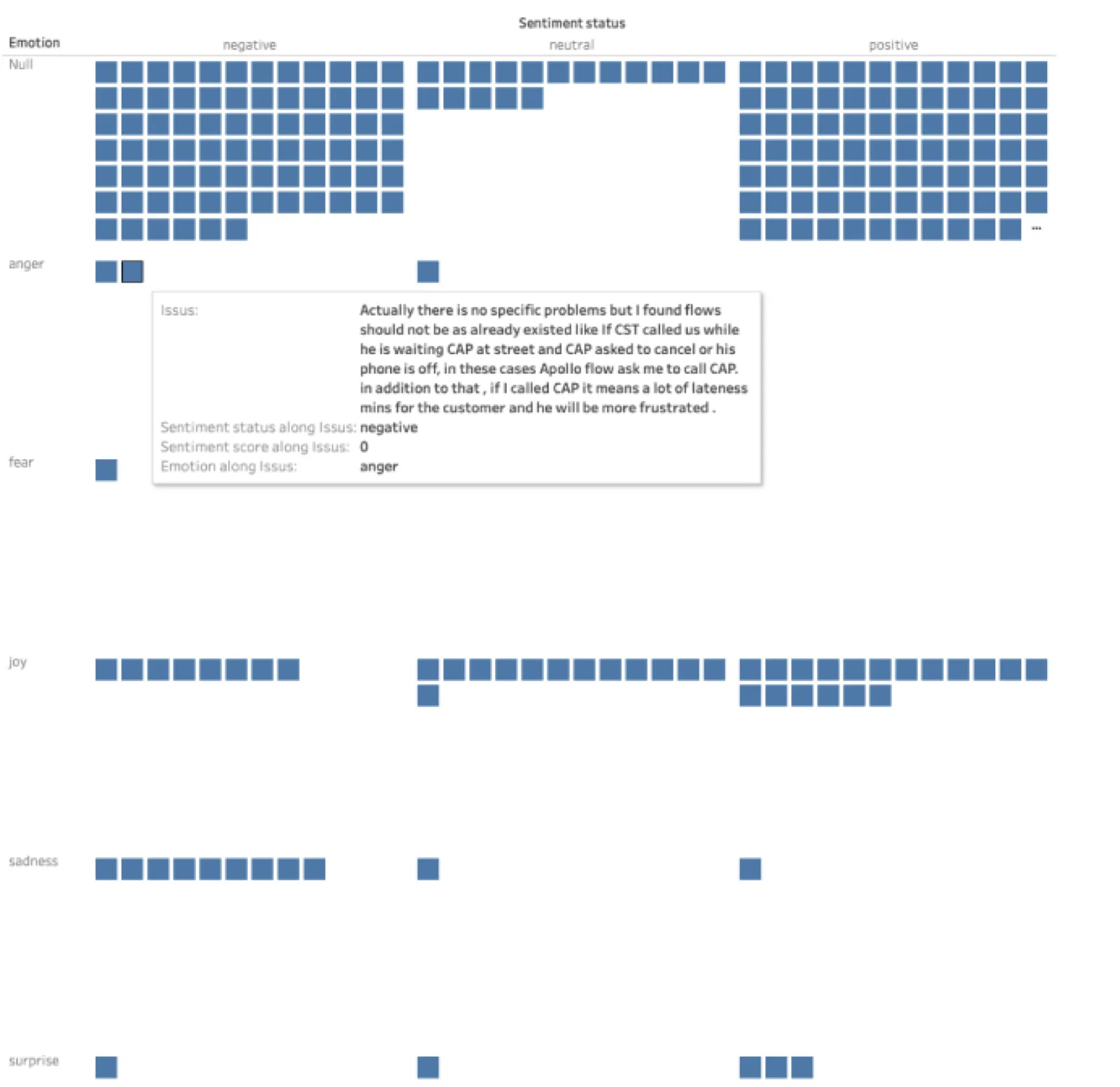
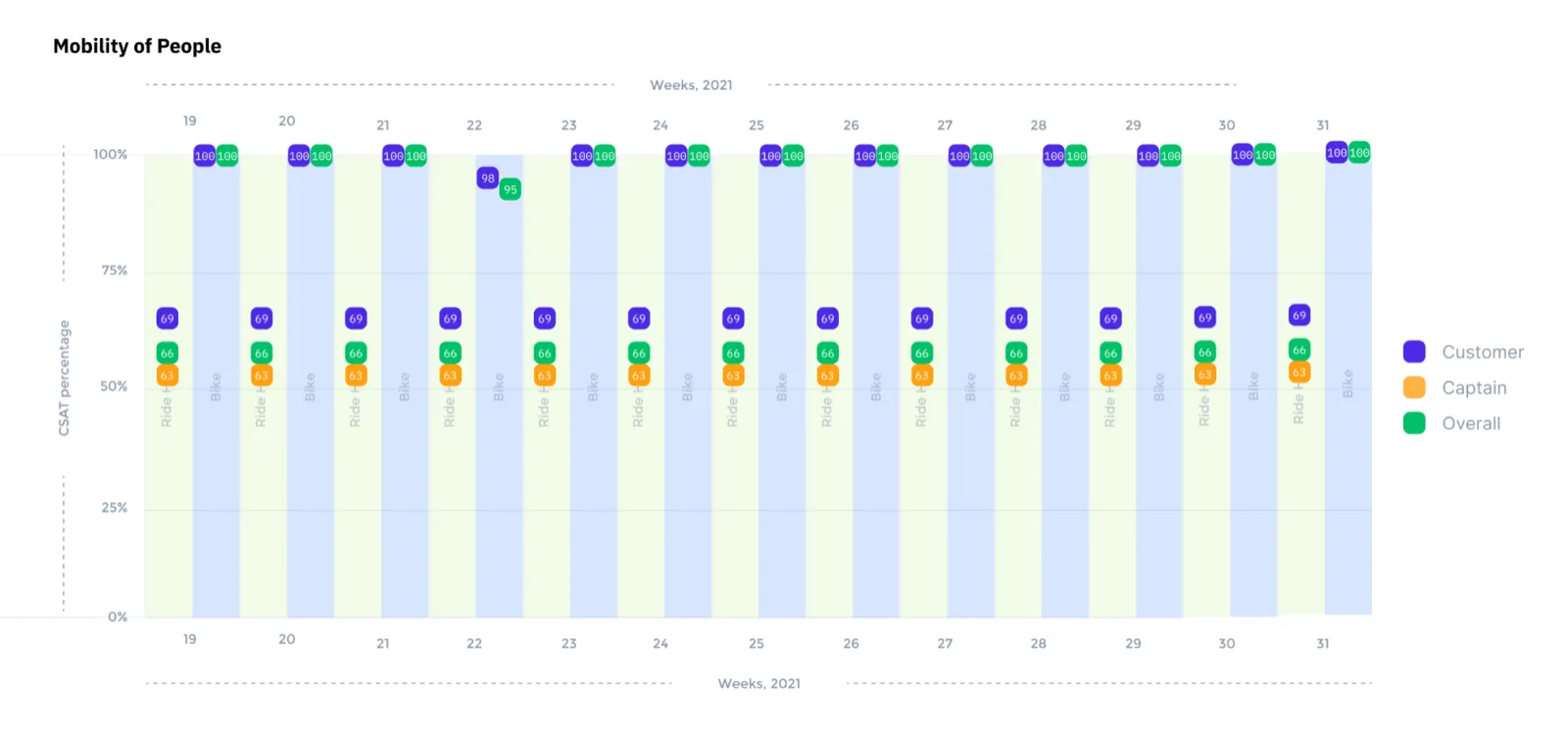
SUS lets us compare our score against 30+ years of product-development data, so we know how we rank and where to focus. I owned study design, feedback collection, rage-response elimination, and stakeholder communication. Then I configured Tableau and the R language for natural-language processing, to see how agent SUS scores relate to tenure, sentiment, and resolution channels. I iterated on the visualisations to present the insights clearly.
Problems identified
- Systems and information required by agents are scattered and not aligned with a unified-system vision.
- Design is inconsistent due to no design QA after production.
- New features were needed to improve usability and keep up with new policies.
- Reliance on Zendesk remained costly due to feature gaps.
- Agents were overly reliant on the knowledge base.
- UX metrics needed continuous measurement for a clearer picture of the system.
High-level information architecture
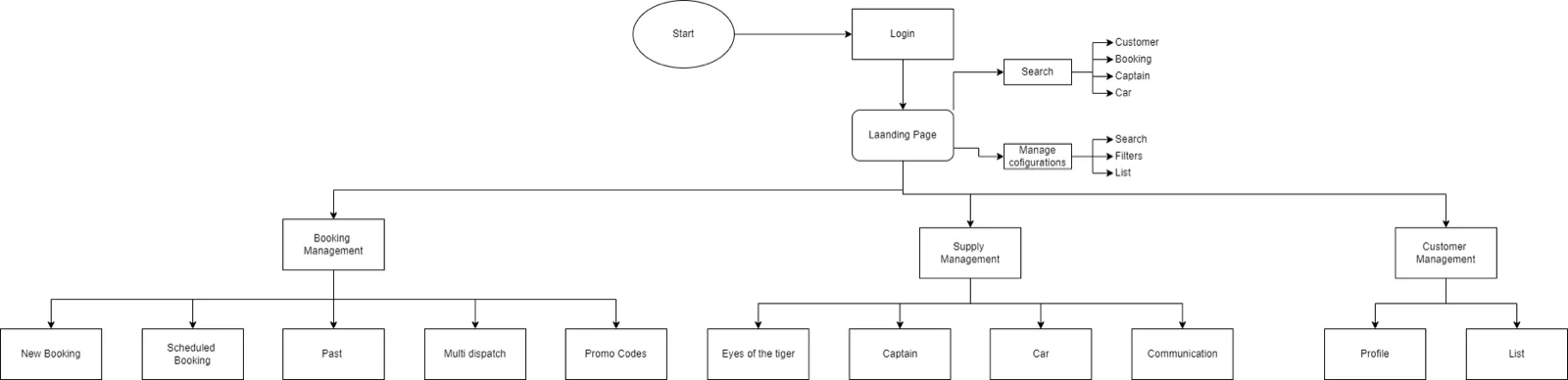
Agents spend a lot of time navigating systems to solve contacts, which impacts their success and average handling time. Key questions: How might we unify all the systems in place? How might we improve the usability and learnability of the system? How might we set up processes to collect and incorporate agent feedback?
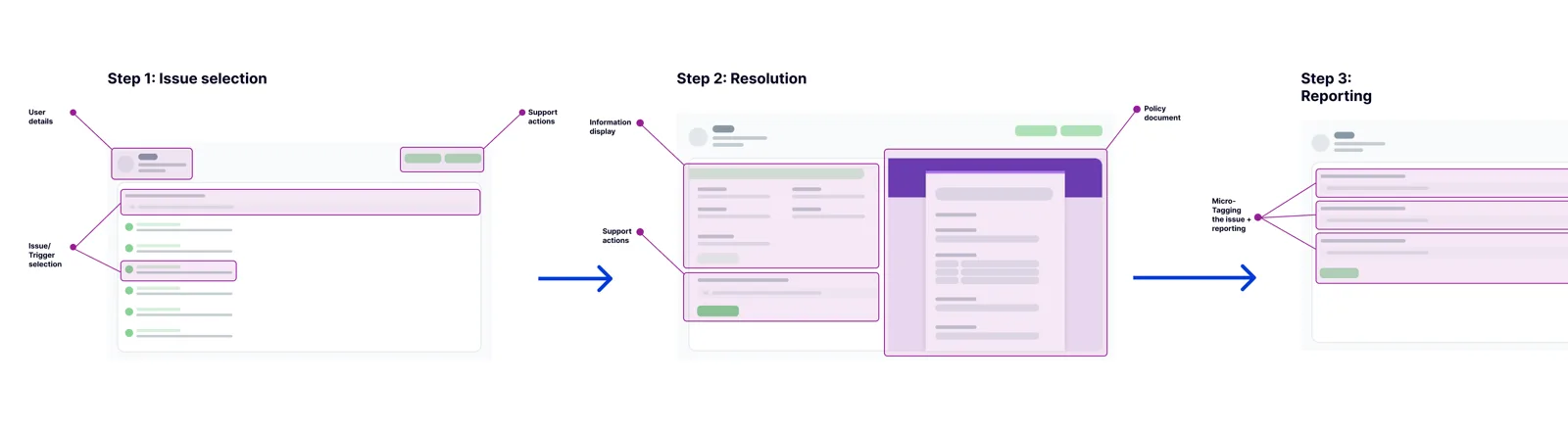
New improved design
I ideated and proposed an improved interface that reduces context/portal switching and surfaces the information agents need to solve contacts. I also collaborated with data-science teams to convert matrix-based Tableau dashboards into interactive, filterable visualisations for investor dashboards and communication material.
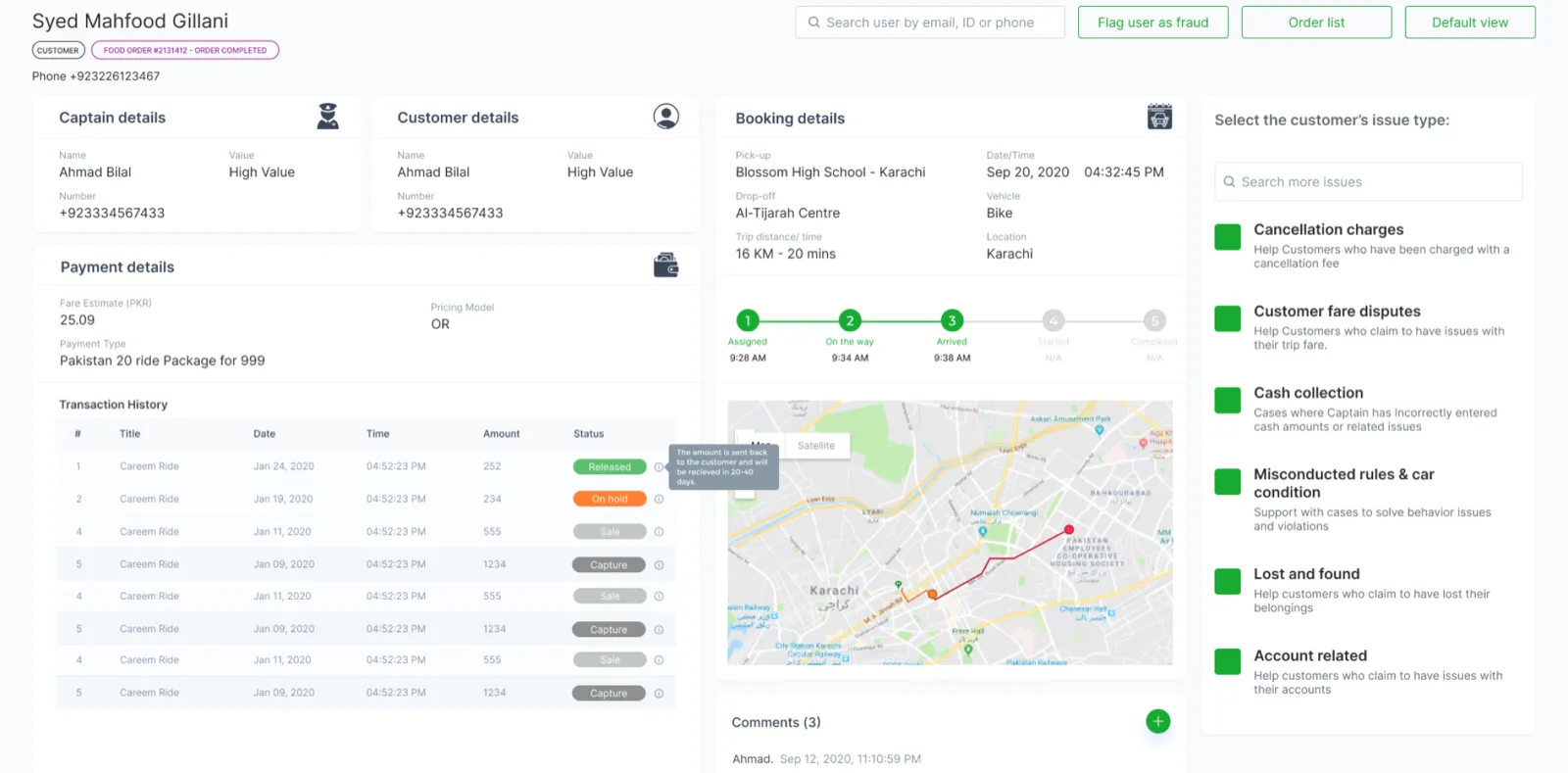
Impact
- Reduced average handling time by 76 seconds, a 10% drop.
- Improved consistency: frequent mobbing sessions with the development team resolved consistency issues quickly.
- Unified system vision: prototyped and presented a unified interface containing all the information agents need to close contacts.
- New supporting features like retry transaction and trip progress added value and enabled timely resolution.
- Measuring and tracking KPIs: monitored successes and gaps to introduce new metrics that tracked usability improvements over time.
- Improved information access, reduced knowledge-base dependency, and reduced Zendesk cost.
Support tooling fails quietly. Agents route around the bad parts, the dashboards still look fine, and nobody files a ticket about it. Finding that needs research before design, which is the sequence in Research → Product → Code.