Growing a $250M auto-repair SaaS: +20% ACV, +15 NPS
How product design for a core workflow overhaul and new AI-powered services widened market reach, opened new revenue, and made the product a pleasure to use.
What those numbers mean AutoLeap sells software to auto-repair shops. Over two years I led design on five products there, and the company signed two enterprise accounts worth over $4M in influenced revenue. Customers rated it 15 points higher on NPS, the standard loyalty score, and 23% fewer of them cancelled. Five initiatives ran over that stretch, so I would not hand any single design decision the credit for those figures.
Overview
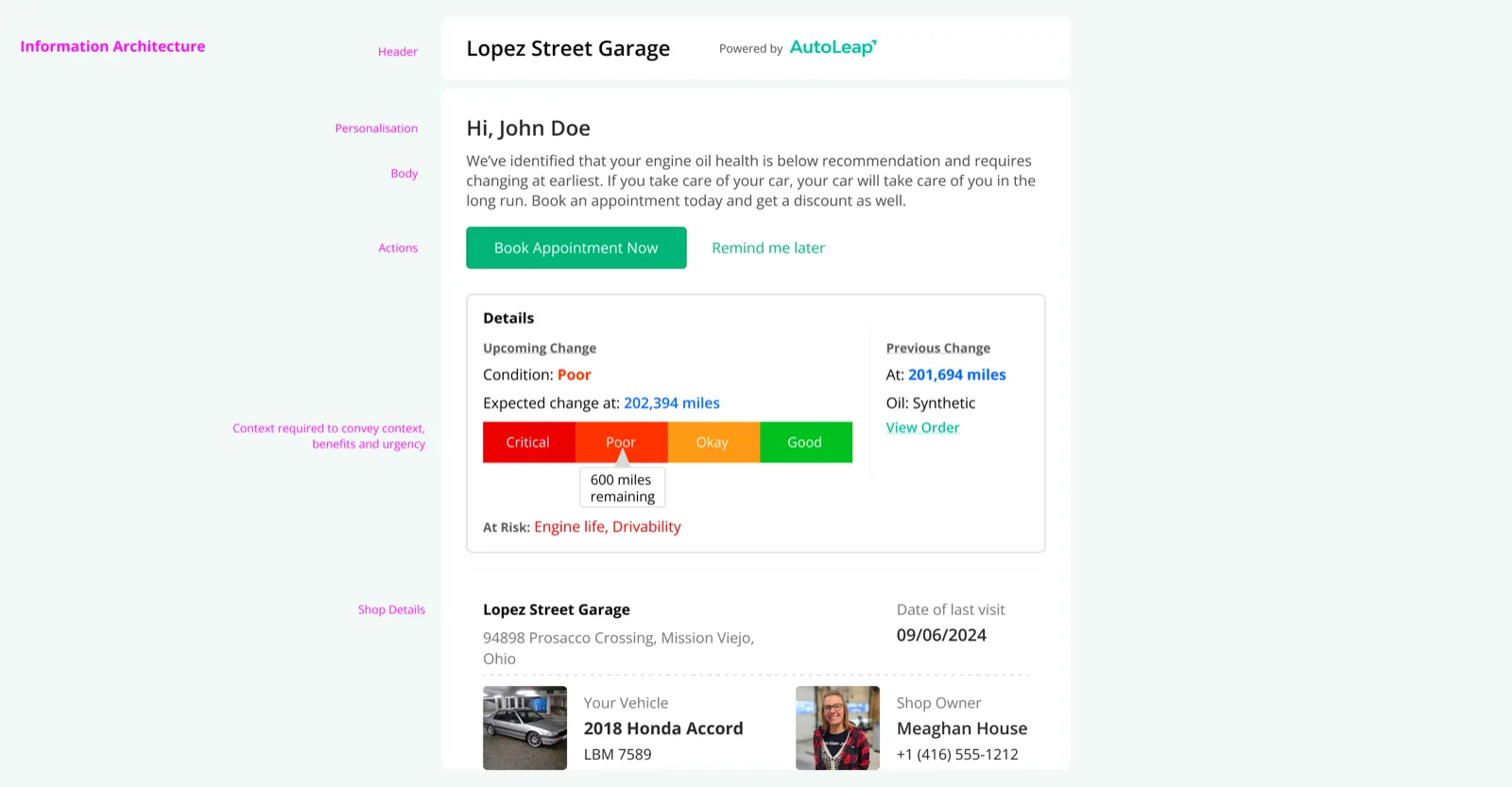
AutoLeap makes shop-management software for auto-repair shops across North America. It faced growing competition and an outdated product suite that was holding back growth. To scale into the enterprise segment and add value for all users, I led the design for five back-to-back initiatives that mattered.
First, a complete overhaul of the Digital Vehicle Inspection (DVI) tools. That turned a cumbersome workflow into a modern, fast one. Building on this, I revamped the core Work Management system with a highly visual, customizable Kanban board.
After these foundational improvements, I led the design for a new flagship product: AutoLeap's AI Receptionist (AIR), built to solve the industry-wide problem of missed calls. Last, I led the design of an integrated AI experience that uses data from all the previous initiatives to generate Repair Orders automatically, which cuts administrative work for service advisors.
A fast AI-powered repair order workflow
The challenge: the "blank page" problem
One of the biggest administrative hurdles for service advisors was service writing itself. Every new job started with a blank page. They had to piece together customer concerns, inspection findings, services, and parts by hand. The work was slow, error-prone, and pulled time away from customers.
The solution: from conversation to estimate in seconds
Working with the VP of Product, we designed an integrated experience that removes the blank page. This workflow ties together all our previous efforts.
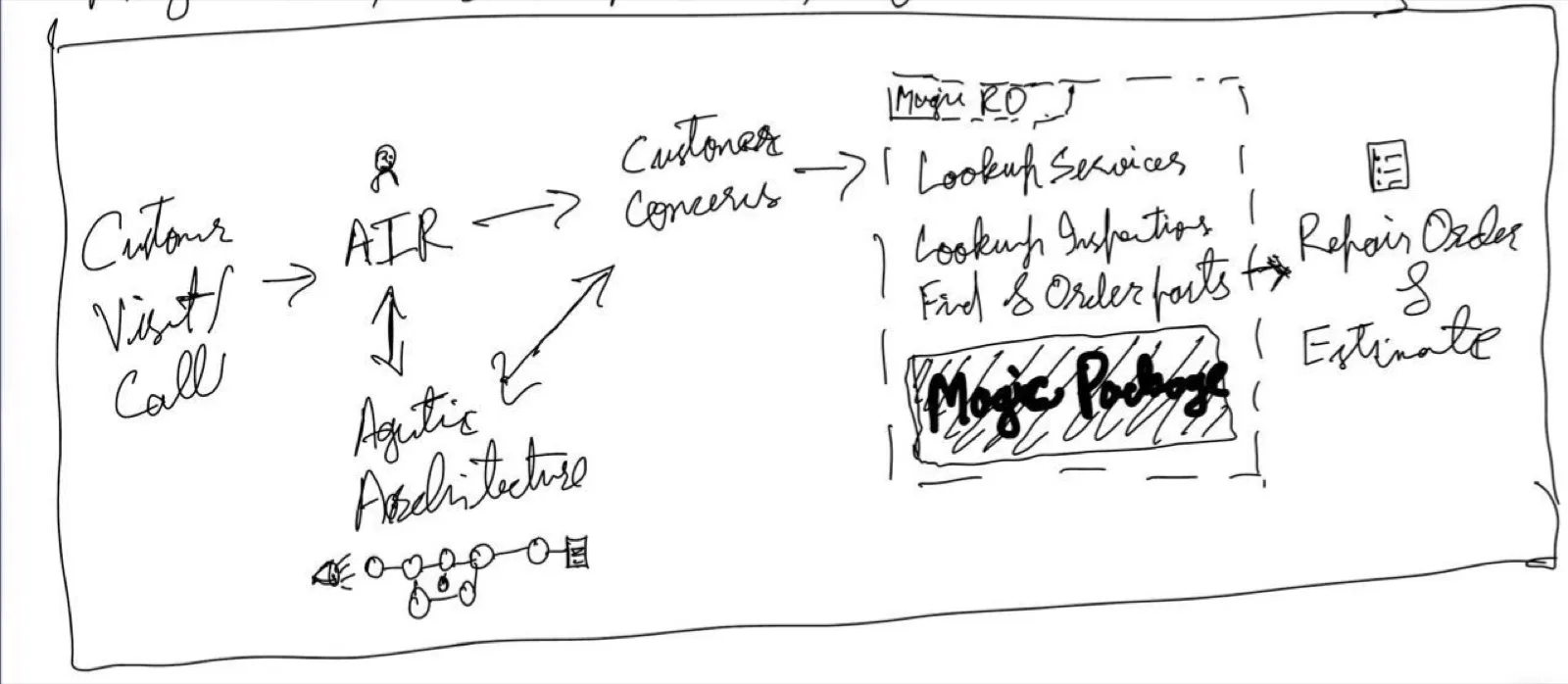
- AI-assisted service writing: we put a conversational AI agent right into the estimate screen. Service advisors can type or speak plain commands like "oil change, replace rear wiper, squeaking brakes." The AI parses this, identifies the distinct jobs, and adds the line items to the estimate, with parts and labor.
- Magic repair order generation: the system connects to the AI Receptionist. When AIR captures a customer's concerns during a call, it triggers the "Magic RO" process. This cut the time to create an estimate a lot, because the service advisor now starts with a nearly complete order instead of an empty page.
- Human in the loop: a core principle of the design was to keep a human in the loop. The AI gives a strong starting point, but the service advisor always has the final say to review, edit, and approve the order. That kept the AI practical, scalable, and trustworthy.
I designed and built these prototypes end-to-end with NextJS, TailwindCSS v4, and mostly shadcn/ui. That let me hit the highest fidelity possible to communicate the ideas.
AI Receptionist
We turned to a problem every auto shop has: missed phone calls, which turn straight into thousands of dollars in lost revenue each month. Voicemail was a poor, impersonal fix. Most customers never call back if their first call is missed.
The solution: a friendly, intelligent voice on every call
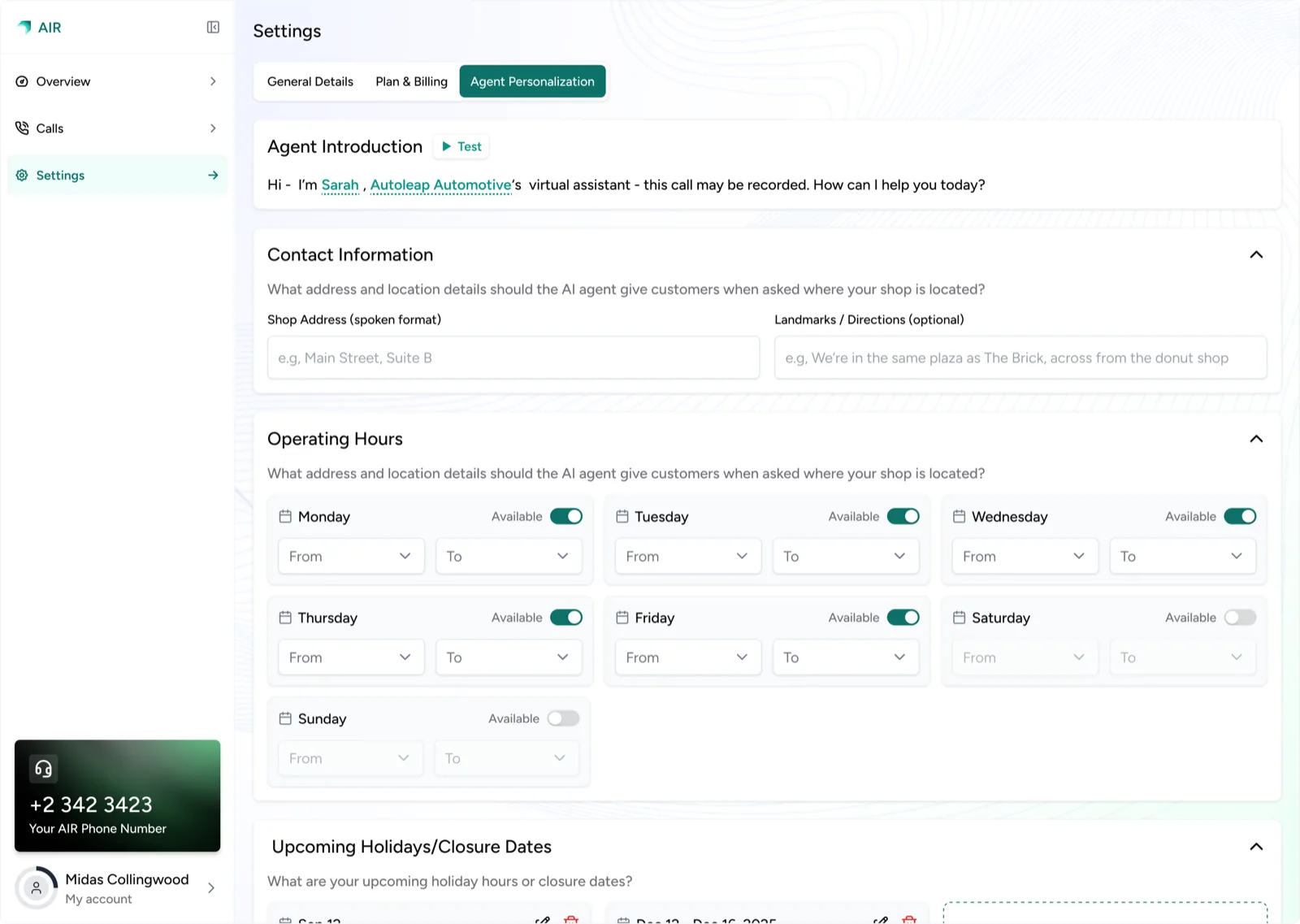
I led the design of AutoLeap's AI Receptionist (AIR), a new SaaS product that makes sure a shop never misses a call again. It handles calls intelligently, gives deep personalization through a full settings dashboard, and makes onboarding easy.
Modernizing Work Management: the Kanban board
The challenge: a rigid, one-size-fits-all workflow
AI improved diagnostics and intake, but the shop's core workflow still ran on a rigid Kanban board. Shops couldn't easily see the status of many jobs in a way that fit their own process. Important details were buried, which led to communication breakdowns and operational bottlenecks.
The solution: a dynamic, visual command center
I revamped the Kanban board into a flexible, powerful command center for the whole shop.
- At-a-glance information with tags: a fast, intuitive tagging system. A single click on a repair order card opens a pop-up to add color-coded tags from pre-made categories or create custom ones, picking from a library of over 500 icons. It flags cars that are "Waiting on Parts," "Ready for Pickup," or a "VIP Customer."
- Total visual control: I added zoom in and out and a full-screen mode, built for shops that show the board on large screens in customer waiting areas to give transparency and build trust.
Vehicle Check-In App
The challenge: a slow, manual drop-off process
The vehicle drop-off is the first physical interaction a customer has with the shop, but it's often slow and paper-based. Service advisors were tied to their desks, transcribing VINs and customer complaints by hand. That caused errors and long wait times, and made a poor first impression.
The solution: a professional, efficient welcome
I designed a modern, mobile-based Vehicle Check-in App that frees service advisors from their desks. They can greet customers at the car and check it in fast. VIN scanning pulls up vehicle history right away, guided photo capture documents the car's pre-service condition, and a simple interface records customer concerns digitally.
Better inspections and estimates
The challenge: an outdated, inefficient workflow
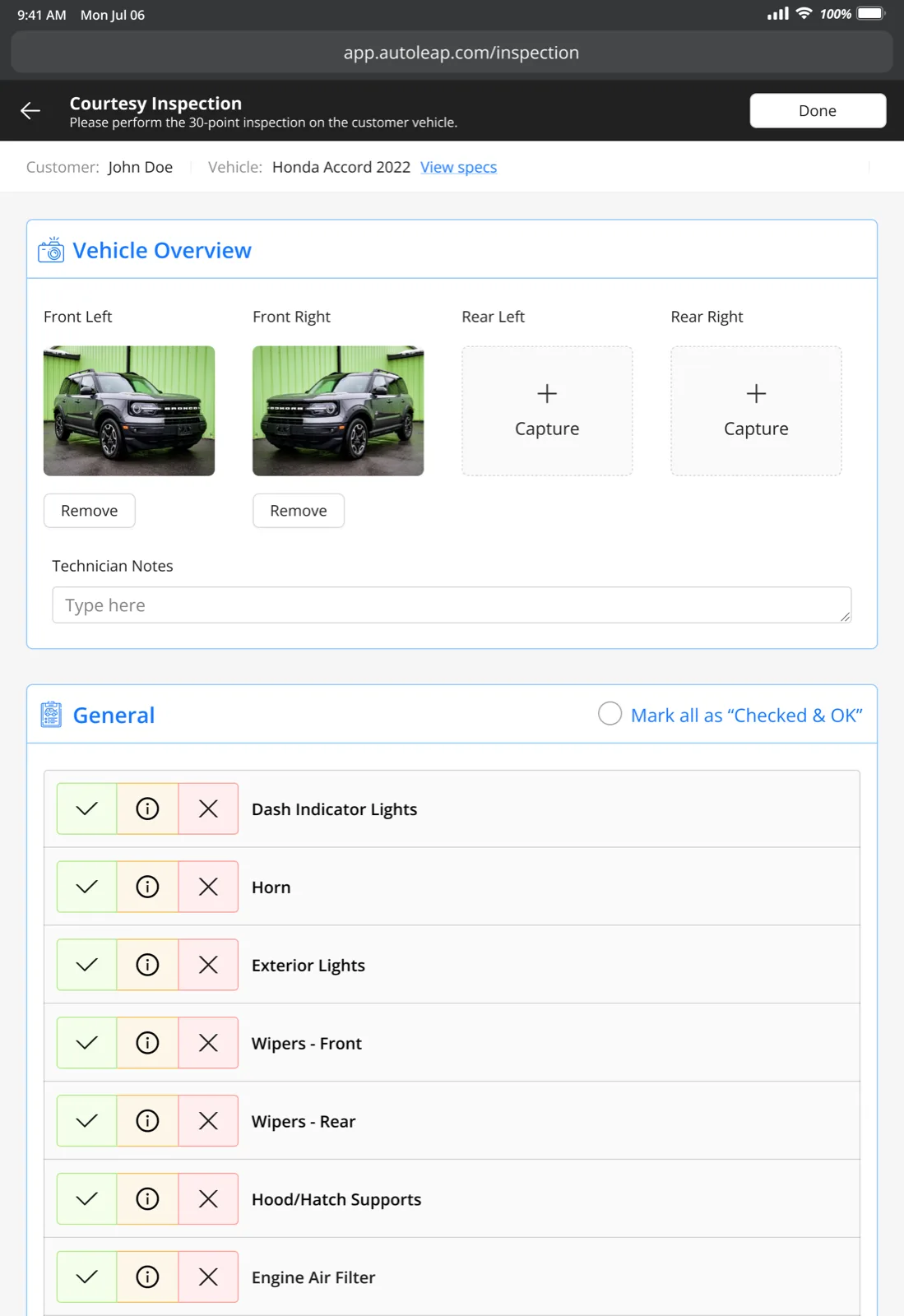
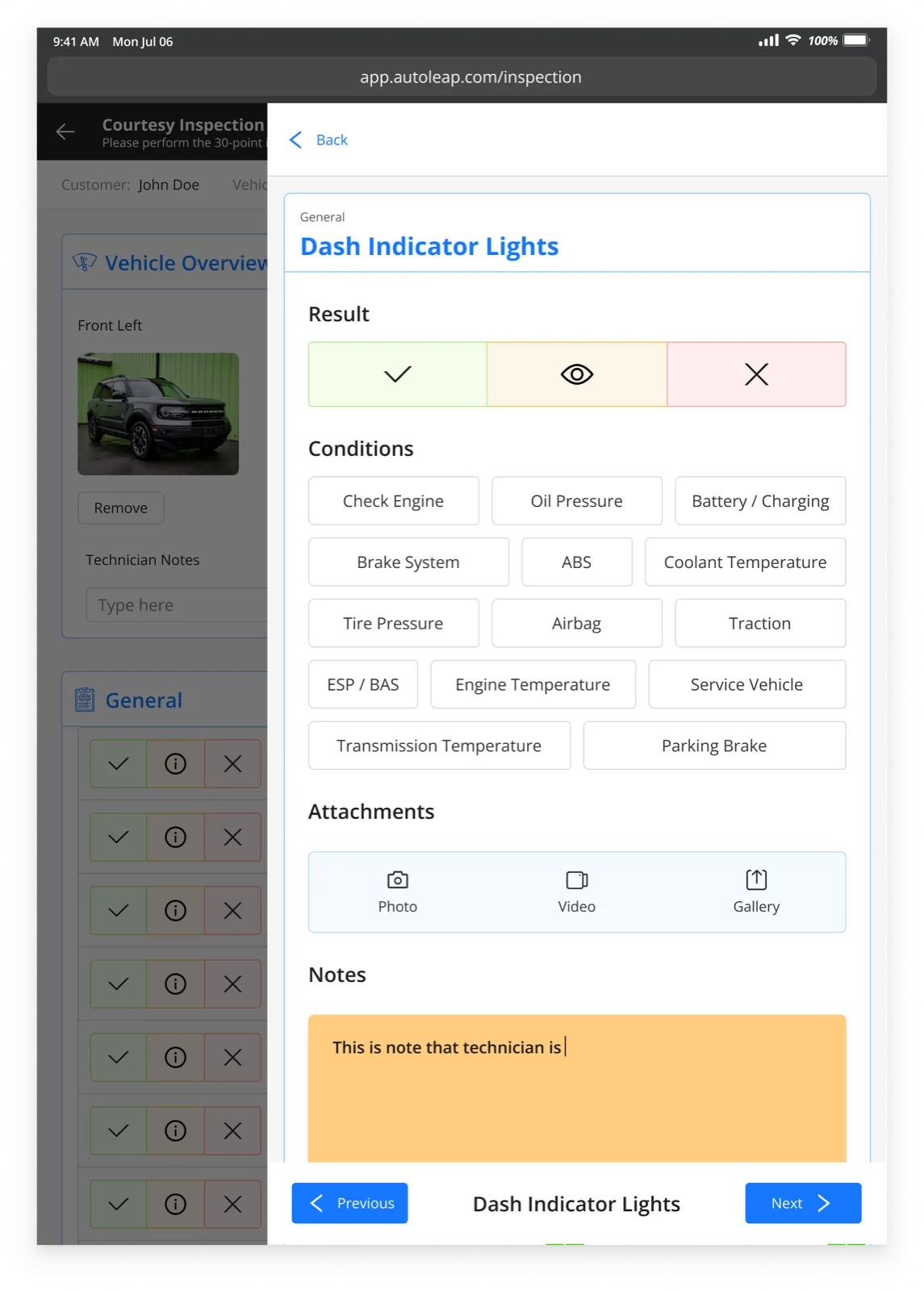
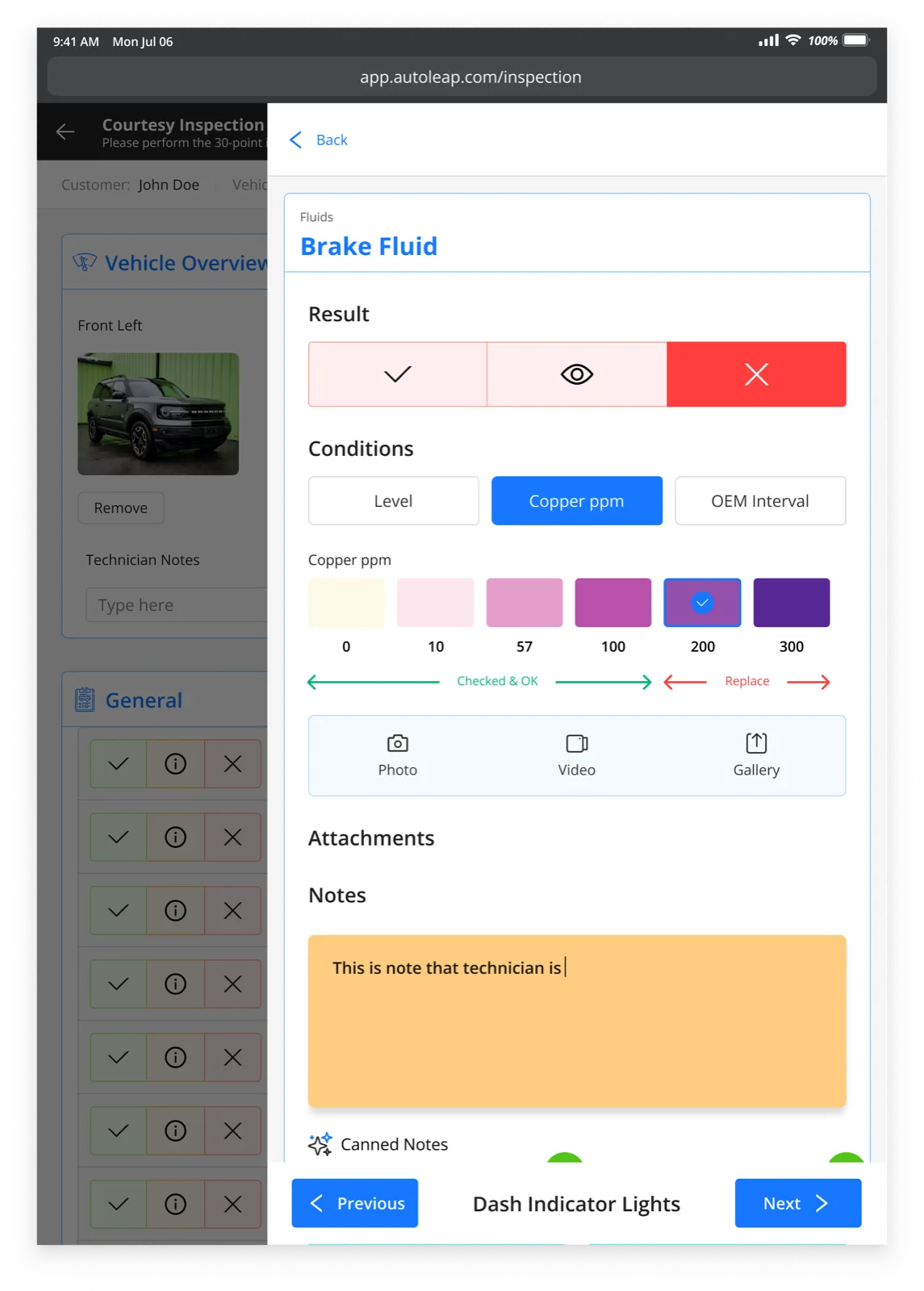
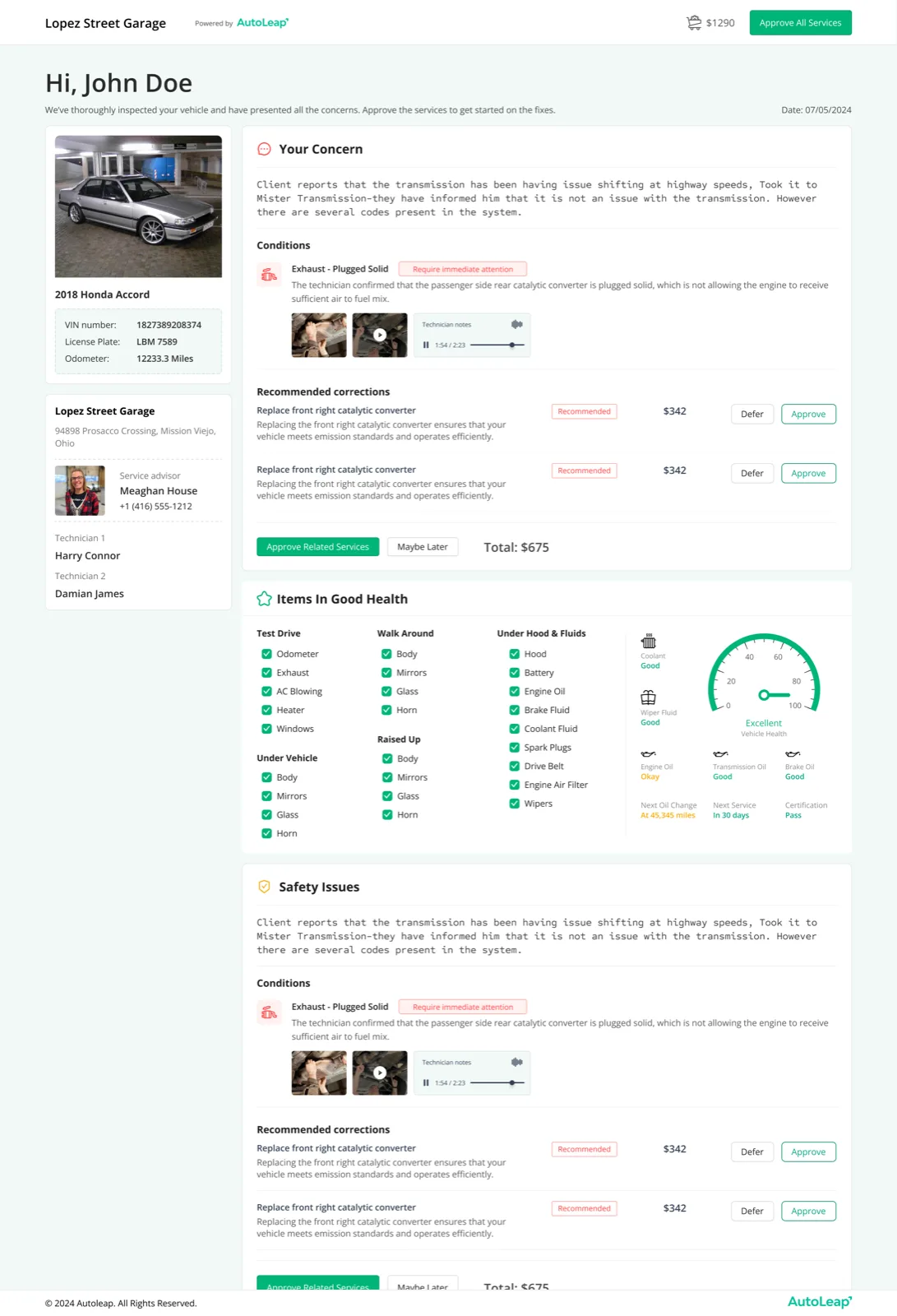
The market for auto-repair software kept moving, but our DVI product didn't. The existing tool had a few flaws that blocked further growth: slow technician UX, no way to link findings to customer concerns, weak upselling, and no enterprise-ready features.
The solution: a fully integrated, persuasive DVI
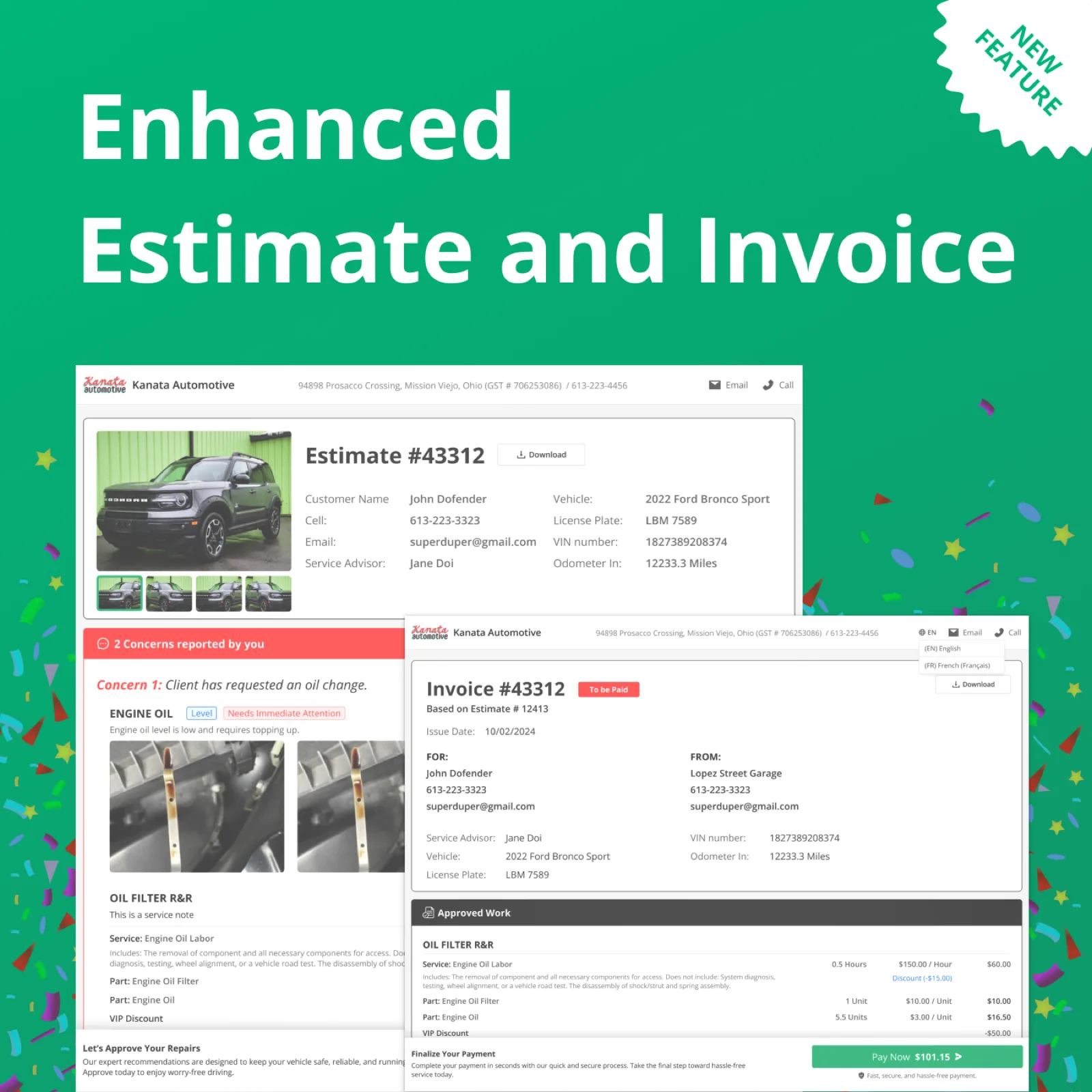
We rebuilt the DVI module into a tool made for efficiency, clarity, and conversion. We designed a modern interface for technicians, a connected workflow for service advisors, and a data-rich, mobile-first estimate for customers that builds trust visually and lifts repair approval rates.
Impact and results
Together, these five initiatives reshaped the AutoLeap platform and what it offers.
- Customer acclaim and growth: users loved the DVI overhaul, and it lifted NPS by +15 points. That, plus the new AIR product, was the thing that won us enterprise clients.
- More revenue for shops: the redesigned DVI communicated more clearly, and that raised repair approval rates. The AI Receptionist opened a new revenue stream by catching leads that used to be lost.
- Big efficiency gains: the revamped Kanban board gave instant clarity into shop operations, while the Magic Repair Order and AI-assisted service writing cut administrative time a lot.
- Positioning as a technology leader: launching a connected AI product suite put AutoLeap ahead in the industry, past standard shop management software.

The growth here came from research that changed the roadmap, not from a growth team bolted on afterwards. I wrote up how that sequence runs in Research → Product → Code, and the rest of my methods sit on the research page.