Outcome-Driven Innovation, made teachable
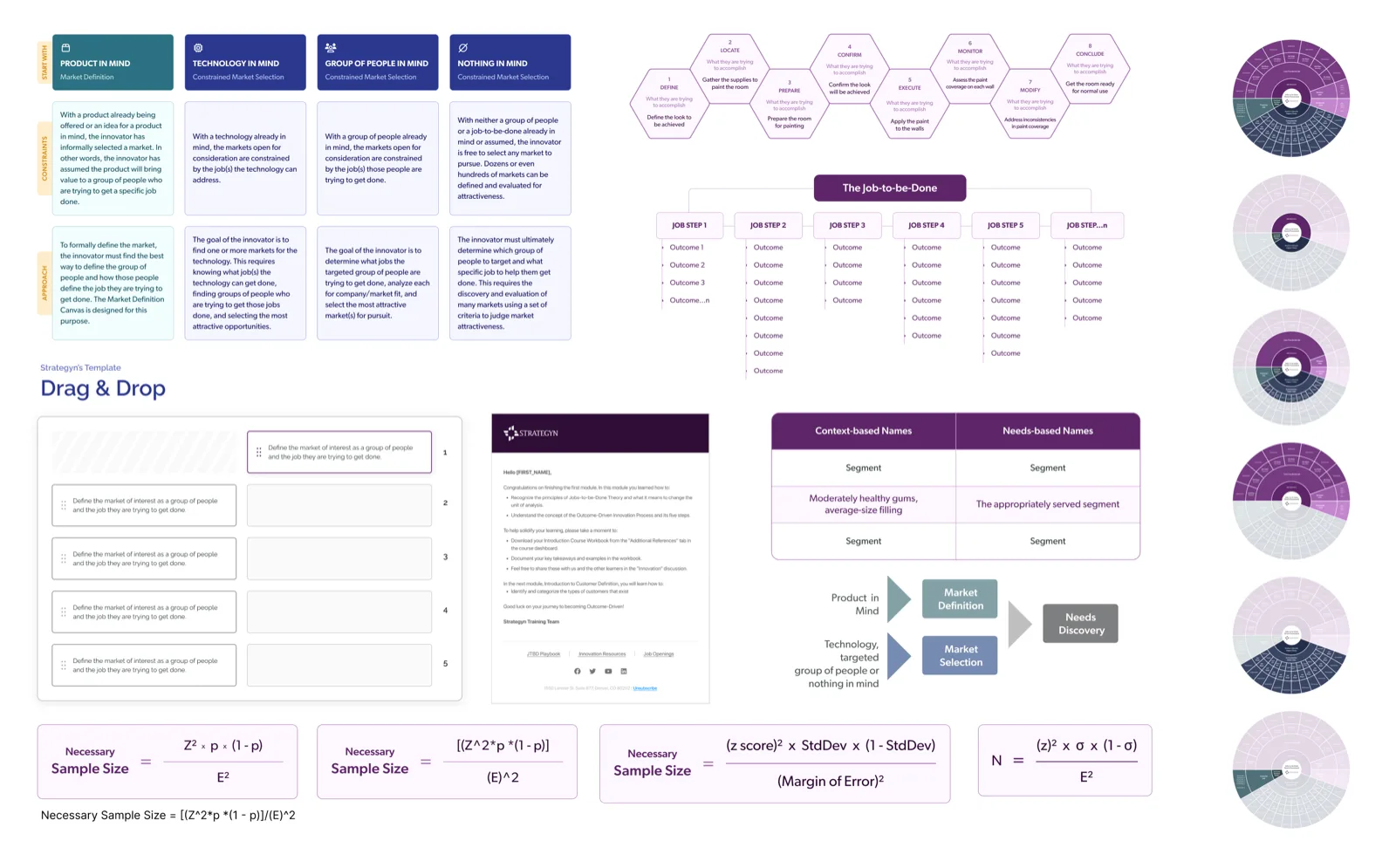
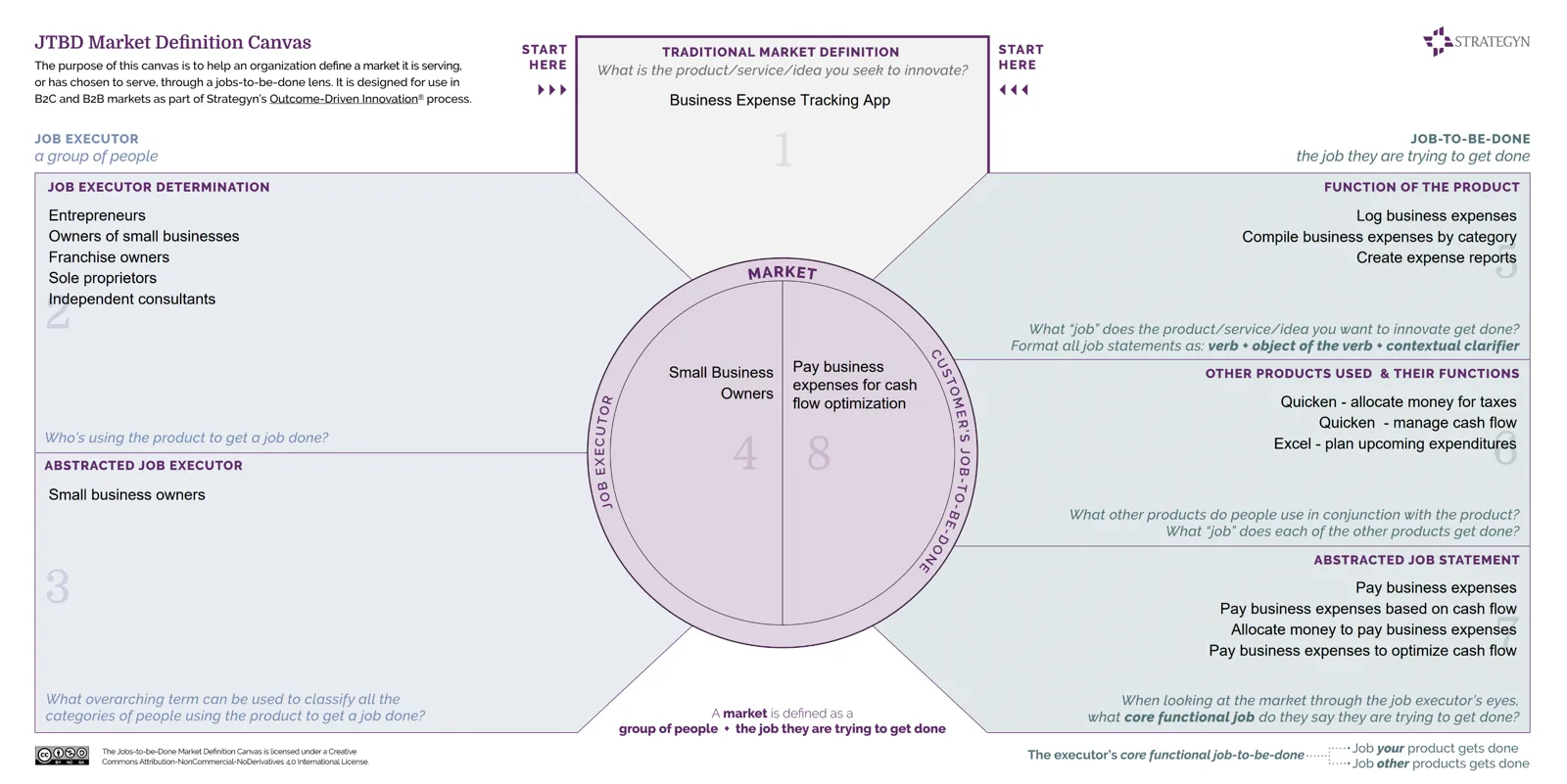
Making Outcome-Driven Innovation (ODI) easy to learn and practice. We improved the JTBD curriculum and built research tools for problem-solving teams.
What those numbers mean Strategyn invented Outcome-Driven Innovation, a way of deciding what to build by measuring what customers are trying to get done rather than asking what they want. I taught it, and I built the two research tools their consultants use to run it.
Purpose of this case study
This case study covers the work we did to improve our JTBD course curriculum and build research tools for problem-solving teams.
About Strategyn
Strategyn is a growth-strategy and innovation consulting firm. Its clients include blue-chip companies, private equity and VC firms, government agencies, and start-ups. Strategyn pioneered Jobs-to-be-Done theory and the Outcome-Driven Innovation (ODI) process, so it is well placed to help create successful products the first time.
My role
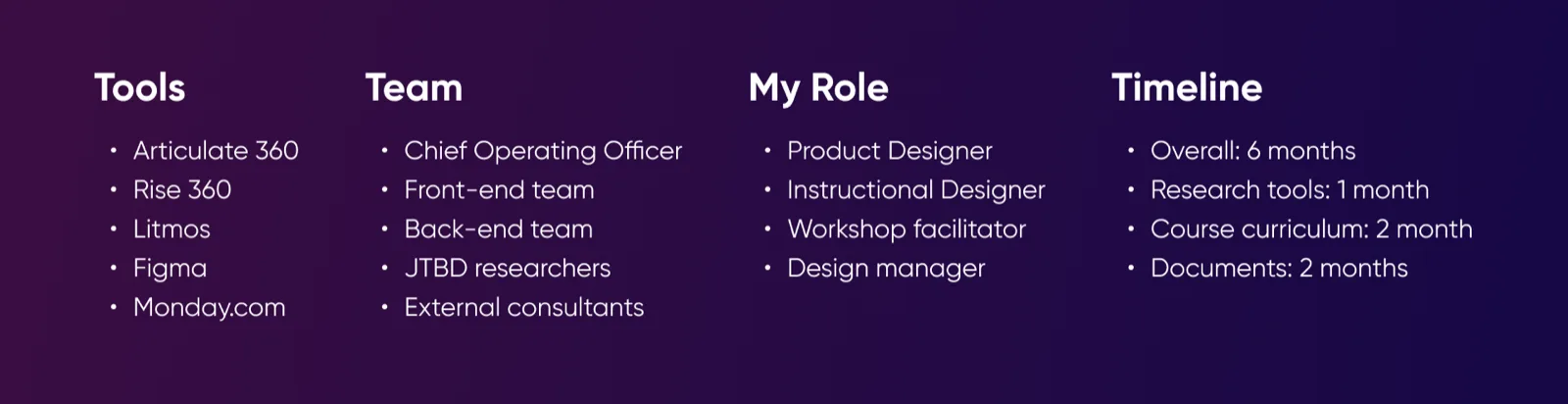
My role at Strategyn spanned a few areas. It blended product research and design with instructional design. I worked with several teams to develop and publish course material, build SaaS research tools, and manage the internal design team.
Solution
We designed the Outcome Validation and Needs Framework tools. They changed how we capture and validate customer needs inside the JTBD framework. That improved the innovation process and tied product development to real market demand.
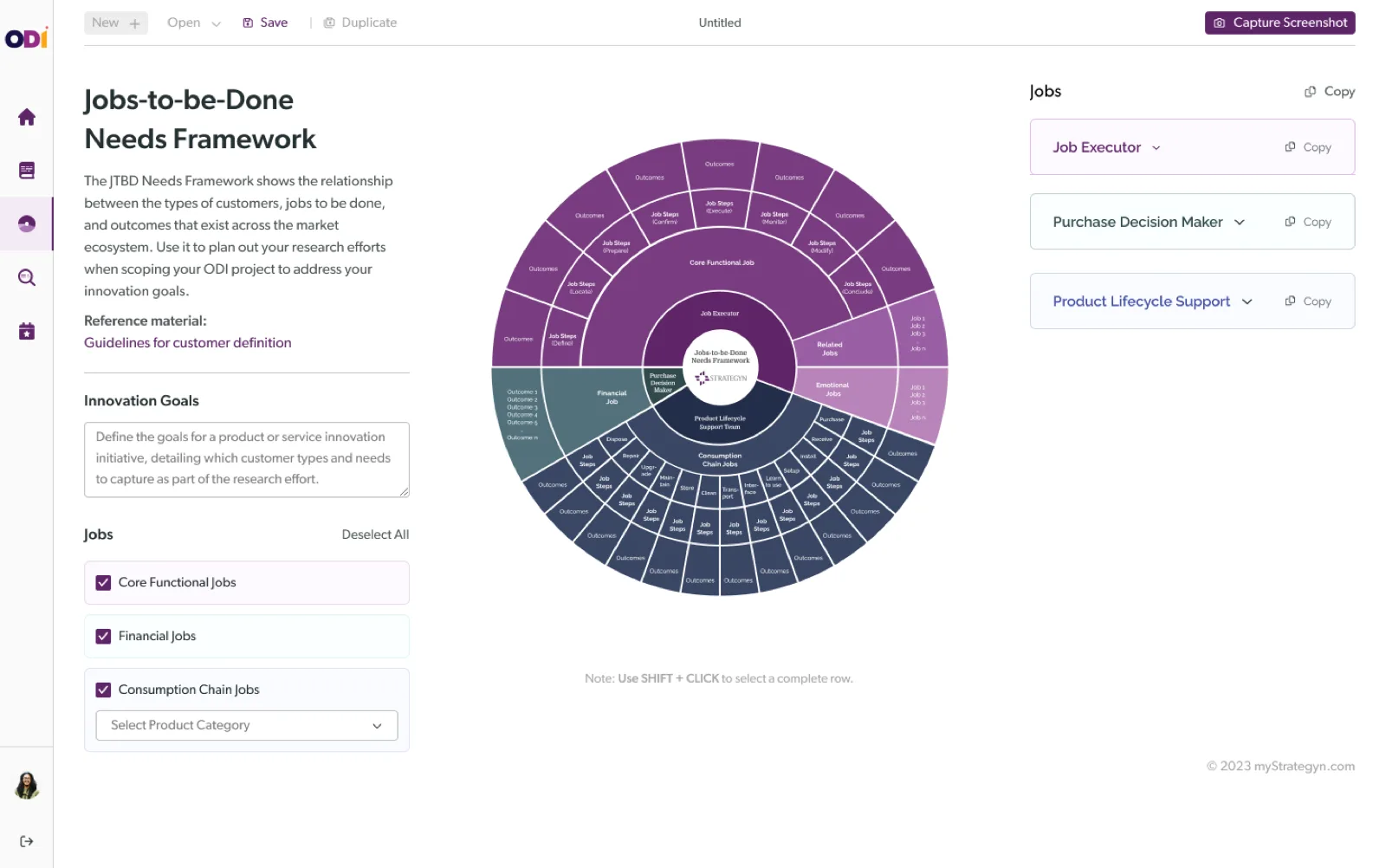
Needs Assessment Tool: rethinking customer insights
Challenge
Traditional ways of finding and assessing customer needs were often fragmented. They missed the connected roles of job executors, decision-makers, and support entities across a product's lifecycle. That gap risked misaligned product features and missed chances for innovation.
Solution
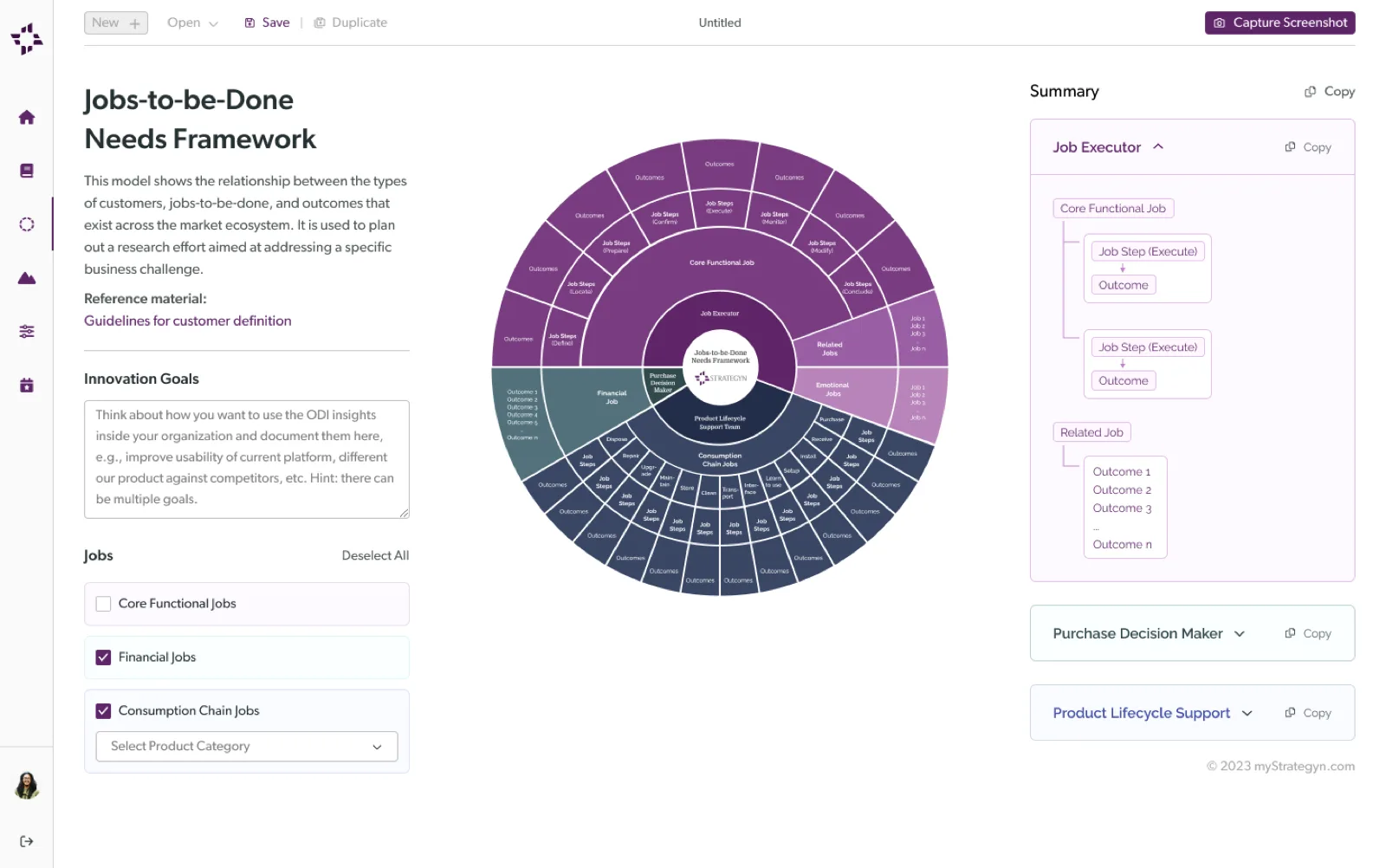
The Needs Framework was designed to study the whole customer, not a slice. It walks users through finding the relevant customer segments, including job executors, purchase decision-makers, and support personnel. It captures the inputs that inform business objectives, so the assessment covers every side of the customer interaction and need.
Implementation
Building the Needs Framework into our strategic planning meant close work with front-end and back-end teams, researchers, and subject-matter experts. Putting the tool into the workflow moved teams cleanly from broad need identification to targeted, actionable insights. That led to more aligned product development and stronger market positioning.
The Outcome Validation Tool: making innovation accessible
Challenge
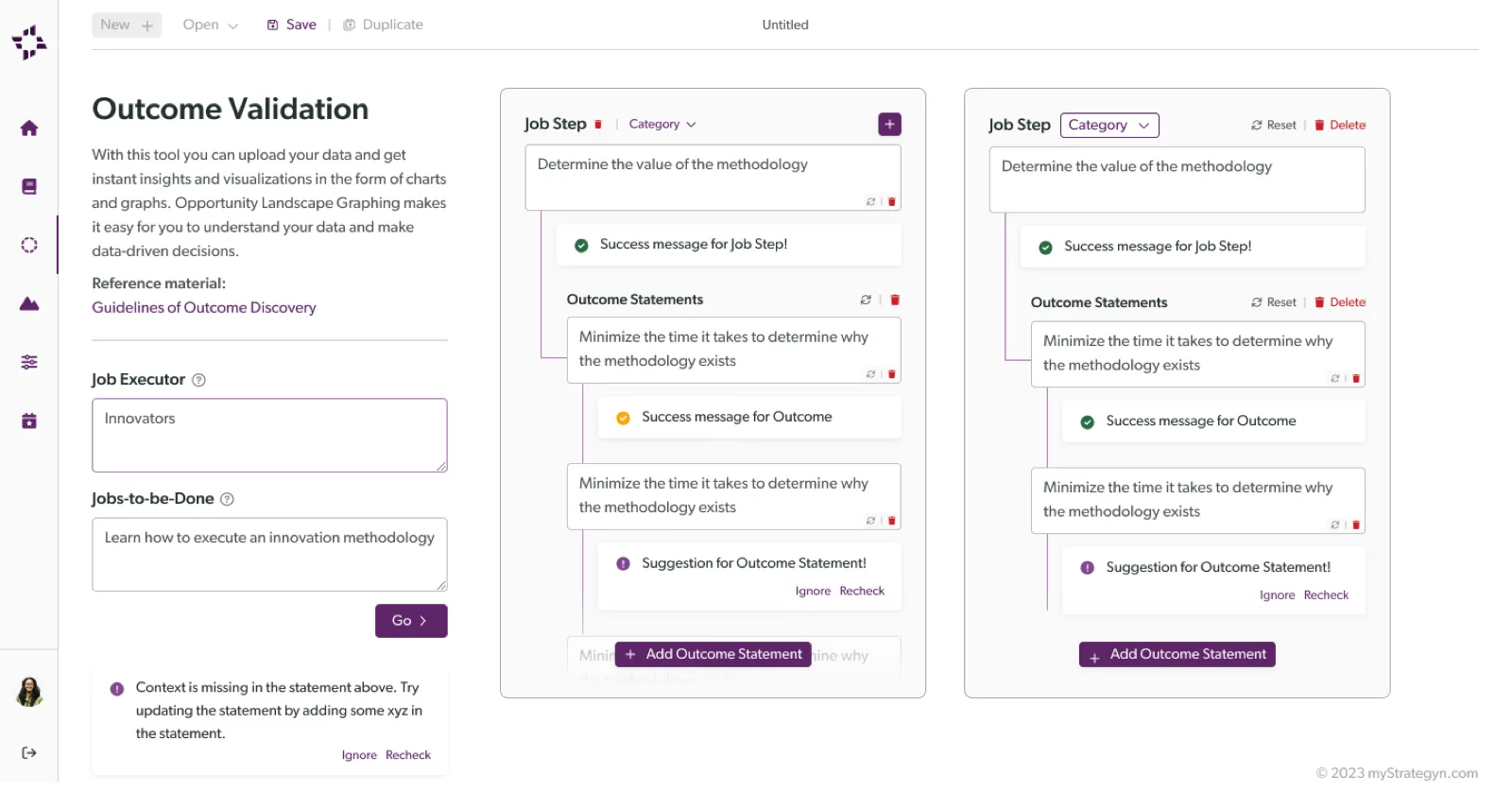
The main problem was how complex and slow it was to document and validate customer need statements, which matter for understanding the jobs, job steps, and desired outcomes of customers. The process was cumbersome, error-prone, and had no systematic way to keep quality high.
Solution
As a product designer, I shaped the Outcome Validation tool's functionality and experience. It lets teams document customer jobs, job steps, and outcome statements quickly. Once a statement is entered, the tool scores its quality and suggests improvements, using an algorithm grounded in ODI principles.
Key benefits
- Efficiency: teams could create high-quality customer need statements much faster, which sped up the early stages of innovation.
- Accuracy: the improvement suggestions helped make sure documented statements were high-quality and reflected customer needs.
- Convenience: an intuitive interface and a systematic approach made the process workable for teams of all sizes.
Results
The overhauled JTBD curriculum and the new research tools now carry the mission Strategyn hired me for: make innovation predictable.
- Higher engagement and satisfaction among teams.
- Better quality and consistency in how teams applied the JTBD framework across projects.
ODI is a research method before it is an innovation method, which is why teaching it means teaching people to interview well. The same thread runs through Research → Product → Code and the rest of my research.